The Truth About Ice Dams: Facts and Fiction
The Truth About Ice Dams: Facts and Fiction

Understanding Ice Dams: What Every Homeowner Should Know

Winter can be beautiful, but it also brings unique challenges—especially for homeowners. With the return of the Polar Vortex, ice dams have once again become a hot topic (pun intended) for anyone with a roof over their head. There’s a lot of information out there, so let’s cut through the confusion and separate fact from fiction when it comes to ice dams.

Fact: You Can See Ice Dams from the Ground (Sometimes)

Spotting an ice dam isn’t always difficult—those massive icicles and little glaciers hanging from your gutter are hard to miss. But don’t be fooled! The trickiest ice dams like to hide above skylights, in roof pans, or grow quietly up valleys and on dormers, out of sight from the ground. A quick visual check is helpful, but it’s not always the whole story.

Fiction: When It Comes to Insulation, More Is Always Better

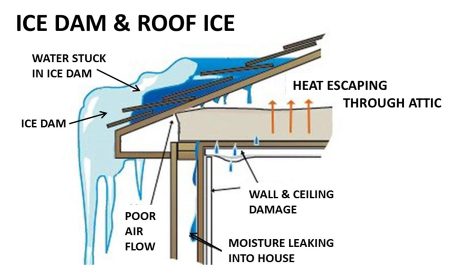
It’s tempting to think piling on the insulation will keep ice dams at bay. In reality, insulation done wrong can be just as bad as too little. If insulation blocks proper ventilation or if air leaks into your attic or rafter spaces aren’t sealed, you’re still at risk for ice dams—no matter how much insulation you have.

Fact: Ice Dams Can Occur Even with Little or No Snow

Thick snow makes bigger ice dams faster, but don’t underestimate the power of a light dusting. It takes very little moisture for ice dams to form. Even a seemingly harmless layer of snow can spell trouble—keep an eye out regardless of the forecast.

Fiction: Gutters Are to Blame for Ice Dams

Gutters get a bad rap, but they’re not the culprit behind ice dams. If your house is prone to them, you’ll get ice dams with or without gutters. Gutters can fill with ice and provide a foothold for the dam above, but without them, the ice just builds on the cold edge of the roof. Many gutter-free homes still need ice dam removal every year.

Fact: Gutter Systems Can Be Damaged by Gutter Ice

While gutters don’t cause ice dams, they sure can suffer from them. A gutter packed with ice can break away or hang dangerously off the roof—no surprise, since fresh water ice weighs about 60 pounds per cubic foot and gutters aren’t built for that kind of stress. Early intervention is best to prevent expensive repairs.

Fiction: Ice Melting Agents Are the Solution

Reaching for rock salt or other melting agents might seem smart, but be cautious. Chemicals like sodium chloride, calcium chloride, or magnesium chloride can damage your roof’s surface, corrode aluminum gutters and valley metal, and even harm plants as the runoff drains below. Sometimes, using the wrong product can make things worse—literally adding salt to the wound!

Fact: The Safest Ice Removal Is Done with Steam

If you need to remove ice, forget hammers, picks, or hatchets—these tools often do more harm than good and can leave your roof in worse shape. Steam is the gold standard for removing both roof and gutter ice safely. When in doubt, call a pro who uses the right equipment.

Fiction: Ice Dams Must Be Thick to Cause Trouble

Even a thin layer of ice—just an inch—can cause serious issues. The pitch of your roof matters, too: steeper roofs need a thicker dam to become problematic, while low slopes can have big problems with just a little ice.

Fact: Ice Dam Leaks May Not Show Up Right Away

Don’t wait for water stains or mold to take action. Leaks from ice dams often snake through wall and ceiling cavities, hidden from view by vapor barriers and construction materials, only to surface much later. If you spot staining, it’s wise to consult a home inspector for moisture or mold testing before warmer weather makes the problem worse.

About the Author

This article was written by Kevin Michaels, Owner/Inspector of Hudson Valley Property Inspections, LLC. HVPI provides moisture testing, indoor air quality sampling, and mold inspections seven days a week throughout the Hudson Valley area of New York.


Proper Attic Ventilation Saves $$$$$

Proper attic ventilation and adequate insulation is essential for maintaining a healthy and energy-efficient home. It can save you thousands on utility bills and help to prevent issues like mold from costing you thousands more in repairs. It helps regulate temperature, prevent moisture buildup, and extend the lifespan of your roof. Proper attic ventilation can… Continue Reading

Gutters !!!

Gutters are an essential part of any home, regardless of the region. However, in the Northeast, where heavy rainfall and snow melt are common, gutters play an even more critical role in protecting your home from water damage. Gutters help to collect rainwater and snow melt from your roof and direct it away from your… Continue Reading

Crawlspace ventilation

The Great Debate…. Crawl Spaces, To Vent or Not to Vent!   During the 20th century, before there were building scientists. Homes were built by carpenters and contractors and a quality construction job included foundation vents into the crawlspace. The thinking was that the vents allowed air to circulate under the house, keeping it dry.… Continue Reading

Are You Ready for the Polar Vortex??

Here it comes….. This President’s Day weekend also includes Valentine’s Day and for good measure let’s throw in a Polar Vortex here in the Hudson Valley. This can cause quite a few headaches — especially with our properties. When the temperature drops during the cold season, your plumbing can take a hit. It doesn’t take… Continue Reading

#1 Myth about sulfur in your water

Many times each week we have someone complain that they have Sulfur in their water. While there are probably few areas of the world where sulfur occurs naturally in the aquifers from which drinking water is drawn, the fact is there are very few. More often the source of the odor is something else completely.… Continue Reading

Home Inspections During the Winter

Home inspectors work year round. Snow can pose huge problems for home inspectors who conduct winter home inspections. If a big snow occurs the night before your winter home inspection, the home inspector will be limited in what he or she can do. Home buyers living in these areas of the country should be aware… Continue Reading

Lightning

Lightning is the “visible discharge of static electricity within a cloud, between clouds or between the earth and a cloud,” as defined by Underwriters Laboratories. Lightning is unpredictable and a serious threat to buildings and their occupants virtually everywhere. Facts about lightning: Benjamin Franklin invented the first lightning rod in 1752 –- a kite outfitted with… Continue Reading

No Ice Water for Dogs!!

Re-posted from Wendt Worth Corgi’s blog. After showing my dog Baran, we went back to our site/setup and got the dogs in their crates to cool off. After being back about 30 min. I noticed Baran was low on water. I took a hand full of ice from my cooler and put it in his… Continue Reading

Disadvantages of Solar Power

While the considerable advantages offered by solar energy move some proponents to ignore the budding technology’s comparatively minor flaws, these imperfections must be acknowledged, lest their resolutions be stalled. We should take an honest look at the system’s disadvantages and seek to refine solar energy systems into a truly environmentally friendly alternative. The most significant… Continue Reading

Safety Guidelines for Home Pools

Swimming pools should always be happy places. Unfortunately, each year thousands of American families confront swimming pool tragedies, drownings and near-drownings of young children. At Hudson Valley Property Inspections, we want to prevent these tragedies. These are guidelines for pool barriers that can help prevent most submersion incidents involving young children. These guidelines are not… Continue Reading

Barbeque Safety

With barbeque season already here, homeowners should heed the following safety precautions in order to keep their families and property safe. Propane grills present an enormous fire hazard, as the Consumer Product Safety Commission (CPSC) is aware of more than 500 fires that result annually from their misuse or malfunction. The following precautions are recommended specifically when using propane… Continue Reading

Why is my vinyl siding melting?

I run into many intriguing issues while inspecting homes here in the Hudson Valley. One of the more puzzling such issues that I ran across, was melting siding. I have run into this problem at least three times, and the obvious causes like, barbeques or heat lamps being too close to the siding just didn’t… Continue Reading

Ice Dams: Fact & Fiction

Here comes the Polar Vortex again! And it’s causing havoc to buildings and roofs all over the country this year. So much for Global Warming!! Here are some facts and fiction about our new friend, the ice dam. Fact: You can see ice dams from the ground.  It’s true that you can usually spot a… Continue Reading

Are You Storm Ready?

We have been lucky this winter in the Hudson Valley. I know I know…. it’s been frigid with a ton of snow. But, my friend,  snow is better than ice. Now is not the time to get complacent and ride out the coming storms without putting a Supply Kit together. Here is a Red Cross… Continue Reading

How to Minimize Energy Use in Your Home During a Polar Vortex

    Winters in the Hudson Valley can get real expensive when it comes to energy costs. The amount of energy required to heat your home increases when temperatures drop. The greater the difference between the temperature outside and the thermostat setting inside, the harder your heating system will work and the more energy it will… Continue Reading

Main Navigation